Lesson 8 of 123:523 Sources
Moving averages (SMA / EMA) and how to use them
Recorded. Publishing soon
Educational content, not investment advice. Nour explains how markets work. She never tells you what to buy or sell.
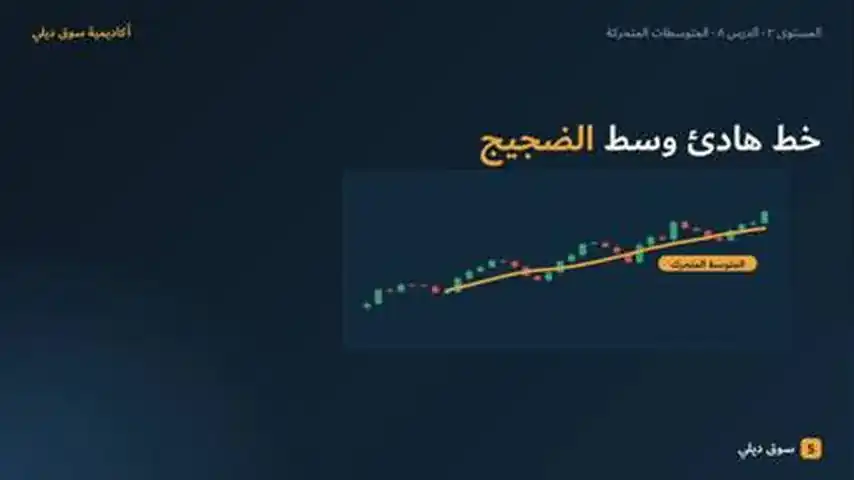
A moving average smooths price to show the underlying direction.
- SMA: sum of closes over N periods divided by N (100, 102, 104, 106, 108 → 104).
- EMA gives more weight to recent prices, so it reacts faster; longer periods are smoother but lag more.
- Uses: reading the trend (slope and price position), dynamic support/resistance, and crossovers such as the 50 crossing above the 200.
- Moving averages lag by nature and fail often in sideways markets.
- Keep one or two standard averages and use them as context, not as a trigger.
Quick check
Three questions. Pick an answer to see why.
1.Closes over 5 days: 100, 102, 104, 106, 108. The 5-period SMA is:
2.What is the main difference of the EMA?
3.Where do moving-average signals fail most often?
Sources
Every fact in this lesson is backed by the sources below.
- 1.MetaTrader 5 Help — Moving AverageSMA and EMA calculation; latest prices weigh more in EMA; classic price-crosses-MA signal
- 2.CME Group Education — Understanding moving averagesEMA weights recent data; short MA crossing above long (e.g. 50 above 200) generally seen as bullish; 200 EMA as support; longer EMA = stronger support/resistance as a general rule
- 3.ASX — Shares course 11: Technical analysis (PDF)Larger period = smoother average; MA runs through the middle of a sideways market and should be applied to trending markets
Educational content, not investment advice. Risk warning: trading forex, CFDs, gold and crypto carries a high level of risk and may not be suitable for everyone. You can lose more than you put in. Souq Daily is an education platform. Nothing here is investment advice, a recommendation or an offer, and past performance does not predict future results.