Lesson 4 of 104:053 Sources
Stop loss: where to place it and where not to
Recorded. Publishing soon
Educational content, not investment advice. Nour explains how markets work. She never tells you what to buy or sell.
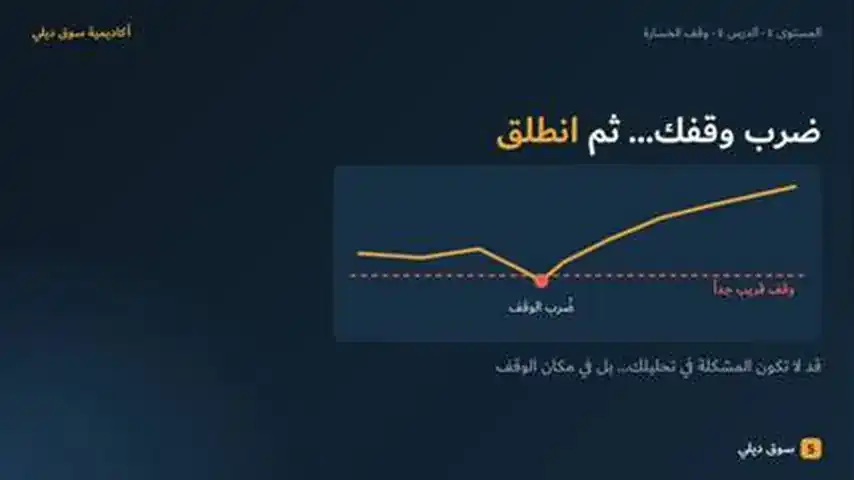
A stop loss belongs where your trade idea is proven wrong — beyond support (for a buy) or resistance (for a sell), with room for spread and normal noise. Then size the trade from that distance.
- When the stop price is reached the order becomes a market order, so the fill can differ from your stop (SEC, FINRA).
- Avoid fixed-pip stops, stops exactly at the level, stops inside normal noise, and stops chosen by the amount that feels comfortable.
- Move a stop only to reduce risk (breakeven or trailing) — never further away.
Quick check
Three questions. Pick an answer to see why.
1.You buy after a bounce from support. Where does the stop usually go?
2.When a stop order is triggered, what does it become?
3.Which stop adjustment is acceptable?
Sources
Every fact in this lesson is backed by the sources below.
- 1.SEC Investor.gov — Investor Bulletin: Stop, Stop-Limit and Trailing Stop OrdersStop order becomes a market order when stop price is reached; execution price can deviate significantly; trailing stops
- 2.FINRA — Stop Orders: Factors to Consider During Volatile MarketsShort-term price moves can trigger stops; stop prices aren't guaranteed execution prices
- 3.CME Group — Futures with a Stop vs. Defined Outcomes with OptionsStop may be based on a change in trend or the trader's maximum loss threshold
Educational content, not investment advice. Risk warning: trading forex, CFDs, gold and crypto carries a high level of risk and may not be suitable for everyone. You can lose more than you put in. Souq Daily is an education platform. Nothing here is investment advice, a recommendation or an offer, and past performance does not predict future results.