Lesson 5 of 104:003 Sources
Crypto: holding Bitcoin and Ethereum safely
Video coming soon
Educational content, not investment advice. Nour explains how markets work. She never tells you what to buy or sell.
This lesson is about custody, not about what to buy.
- Your private key authorises transactions; it cannot be changed, and if you lose it you permanently lose access (SEC).
- A seed phrase restores your wallet; write it down safely, never share it, don't store it on a computer.
- Self-custody puts responsibility on you; third-party custody means trusting a platform that could be hacked, shut down, go bankrupt or lend out assets.
- Hot wallets are online and convenient; cold wallets are offline and more secure from online attacks but can be lost.
- Transactions can't be reversed — verify addresses and test with small amounts.
Quick check
Three questions. Pick an answer to see why.
1.What happens if you lose your private key in self-custody?
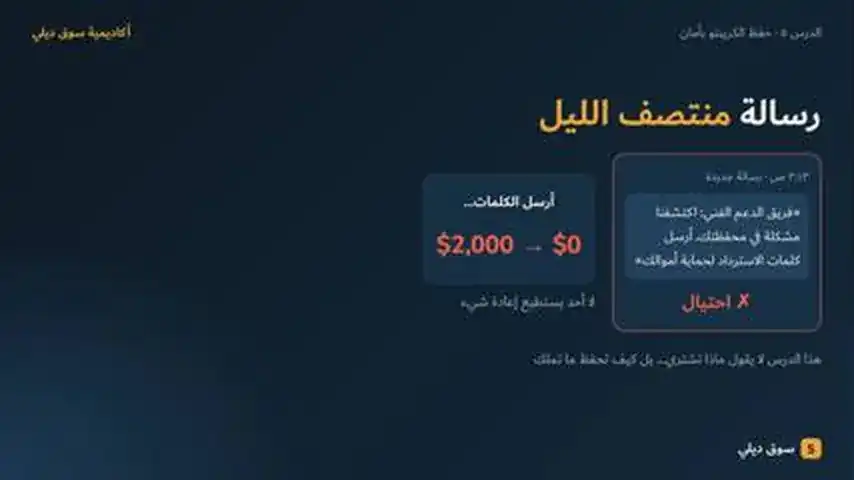
2.Someone from 'technical support' asks for your seed phrase. What is it?
3.Which describes a cold wallet?
Sources
Every fact in this lesson is backed by the sources below.
- 1.SEC/Investor.gov – Crypto Asset Custody Basics for Retail Investors (Dec 2025)Private keys, seed phrases, self vs third-party custody, hot vs cold wallets, custodian risks (hack, shutdown, bankruptcy, rehypothecation)
- 2.ethereum.org – Ethereum walletsWrite down seed phrase, don't store on computer, exchanges hold custody, hardware wallets offline, transactions can't be reversed, bookmark against phishing
- 3.CFTC – Digital Assets (customer advisories)Digital asset market largely unregulated, fraud a significant risk; wild price swings
Educational content, not investment advice. Risk warning: trading forex, CFDs, gold and crypto carries a high level of risk and may not be suitable for everyone. You can lose more than you put in. Souq Daily is an education platform. Nothing here is investment advice, a recommendation or an offer, and past performance does not predict future results.