Lección 3 de 123:572 Fuentes
Tendencia alcista, bajista y lateral: cómo identificarla
Grabado. Se publica pronto
Contenido educativo, no asesoramiento de inversión. Nour explica cómo funcionan los mercados. Nunca te dice qué comprar o vender.
La traducción completa de esta lección llegará pronto. Estás leyendo la versión en inglés.
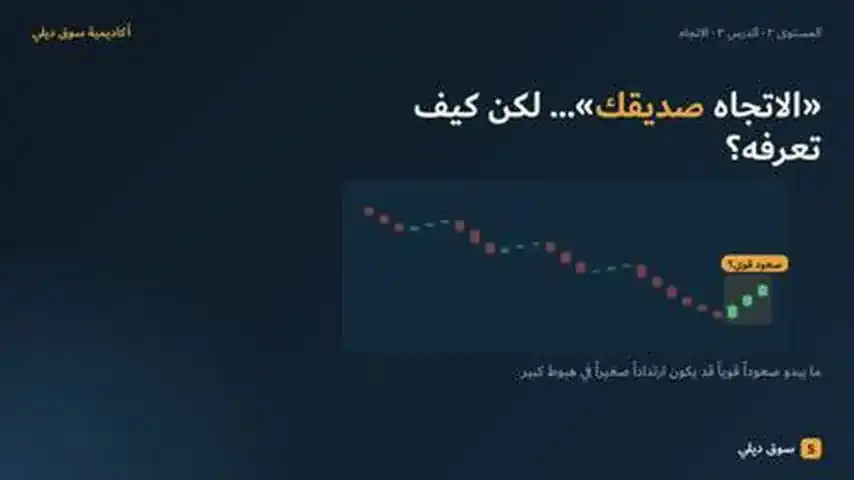
Price moves in waves of peaks and troughs. Comparing them gives a clear rule for the trend instead of a feeling.
- Uptrend: higher highs AND higher lows.
- Downtrend: lower highs AND lower lows.
- Sideways: price moves between a ceiling and a floor; for most investors, a time to stand aside.
- Markets never move one way forever. Breaking the last higher low (or lower high) is the first warning of a change — a probability, not a verdict.
- Write your trend as a testable sentence, e.g. “up while price is above 1.1050”.
Comprobación rápida
Tres preguntas. Elige una respuesta para ver el porqué.
1.Which describes an uptrend?
2.In the lesson's uptrend, which event is the strongest warning of a change?
3.According to ASX education material, a sideways market for most investors is:
Fuentes
Cada dato de esta lección está respaldado por las fuentes de abajo.
- 1.ASX — Shares course 11: Technical analysis (PDF)Uptrend = higher highs and higher lows; downtrend = lower lows and lower highs; sideways market = time to stand aside
- 2.CME Group Education — Trend and continuation patternsMarkets never move in one direction forever
Contenido educativo, no asesoramiento de inversión. Advertencia de riesgo: operar con forex, CFD, oro y cripto conlleva un riesgo elevado y puede no ser adecuado para todos. Puedes perder más de lo que inviertes. Souq Daily es una plataforma educativa. Nada de lo que hay aquí es asesoramiento de inversión, una recomendación ni una oferta, y los resultados pasados no anticipan resultados futuros.