10강 중 1강4:004 출처
투자자와 트레이더: 깊이 보기
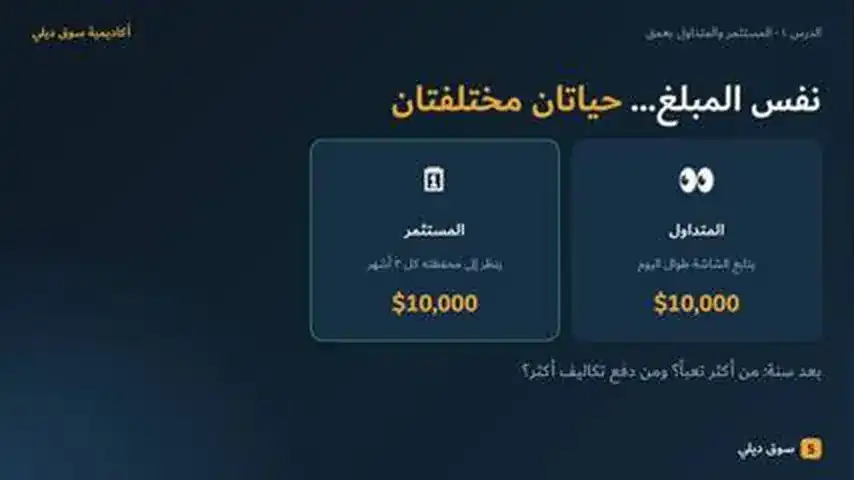
영상 공개 예정
교육 콘텐츠이며 투자 조언이 아닙니다. Nour는 시장의 원리를 설명할 뿐, 무엇을 사거나 팔라고 말하지 않습니다.
이 강의의 한국어 전체 번역은 곧 제공됩니다. 지금은 영어판을 보고 계십니다.
Investors and traders can buy the same asset; the difference is the question they ask and how long they hold. Long-term investing relies on time, compounding and low costs.
- Know your time horizon and your risk tolerance before you start.
- The SEC describes day trading as an extremely stressful, expensive full-time job and warns of severe losses.
- Small annual fees compound: in an Investor.gov example, 0.25% vs 1% on $100,000 over 20 years left about $29,000 less.
- Write a short plan and review it on fixed dates, not after every headline.
빠른 확인
3문제. 답을 고르면 이유를 볼 수 있어요.
1.According to the SEC investor guide, what is your 'time horizon'?
2.$1,000 earns a fixed 5% a year, compounded annually. What is it worth after two years?
3.Which behaviour is the classic 'investor in name, trader in behaviour' mistake?
출처
이 강의의 모든 사실은 아래 출처로 뒷받침됩니다.
- 1.SEC/Investor.gov – Beginners' Guide to Asset Allocation, Diversification, and RebalancingDefinitions of time horizon and risk tolerance
- 2.CFPB – What is compound interest?Compound interest definition and $1,000 at 5% example ($1,050, $1,102.50)
- 3.SEC – Day Trading: Your Dollars at RiskDay trading is an extremely stressful and expensive full-time job; be prepared for severe losses; commissions, training, computers
- 4.Investor.gov – Investor Bulletin: How Fees and Expenses Affect Your Investment Portfolio$100,000 at 4% for 20 years: ~$208,000 (0.25% fee), ~$198,000 (0.50%), ~$179,000 (1%)
교육 콘텐츠이며 투자 조언이 아닙니다. 위험 고지: 외환, CFD, 금, 가상자산 거래는 위험이 매우 높아 모든 사람에게 적합하지 않을 수 있으며, 투입한 금액보다 더 많이 잃을 수 있습니다. Souq Daily는 교육 플랫폼입니다. 이곳의 어떤 내용도 투자 조언, 추천 또는 권유가 아니며, 과거 성과가 미래 결과를 보장하지 않습니다.