10강 중 3강4:004 출처
지수와 펀드: S&P 500과 ETF
영상 공개 예정
진행: Nour아랍어 진행, 자막 제공. 다른 언어도 준비 중입니다.
교육 콘텐츠이며 투자 조언이 아닙니다. Nour는 시장의 원리를 설명할 뿐, 무엇을 사거나 팔라고 말하지 않습니다.
이 강의의 한국어 전체 번역은 곧 제공됩니다. 지금은 영어판을 보고 계십니다.
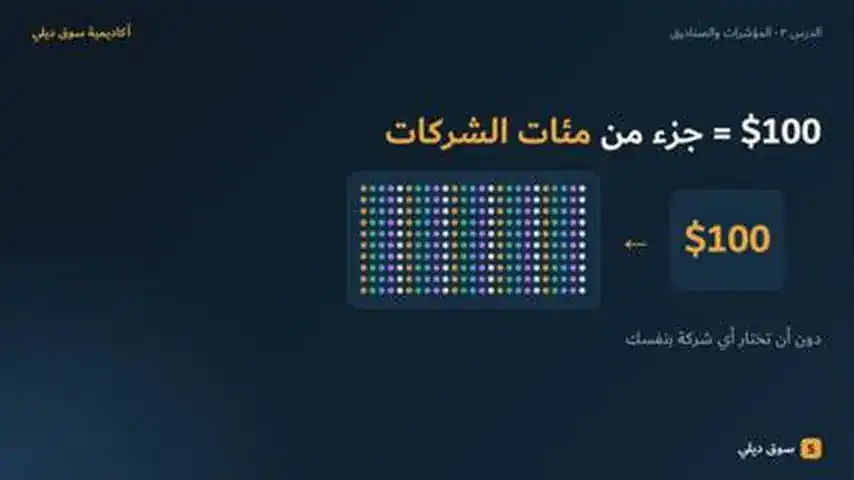
An index measures a basket of securities; an index fund tracks it so you can own the whole basket with a small amount.
- The S&P 500 covers about 80% of U.S. equity market value across 11 sectors (S&P Dow Jones Indices).
- An index fund can be a mutual fund or an ETF; ETFs trade on an exchange at market prices like a stock.
- Index funds still carry risk: they fall with the market and may not track the index perfectly.
- Check what the fund tracks, its expense ratio, any leverage, and trading costs. Leveraged and inverse ETFs target daily results.
빠른 확인
3문제. 답을 고르면 이유를 볼 수 있어요.
1.What does an index fund try to do?
2.Roughly what share of U.S. equity market capitalization does the S&P 500 cover?
3.Which statement about index funds is correct?
출처
이 강의의 모든 사실은 아래 출처로 뒷받침됩니다.
- 1.Investor.gov – Investor Bulletin: Index FundsIndex fund and market index definitions; passive style; risks (tracking, less flexibility); not all index funds cheaper
- 2.SEC – Investor Bulletin: Exchange-Traded Funds (ETFs)ETFs trade on exchanges at market prices; historically lower expense ratios; leveraged ETFs daily objective
- 3.S&P Dow Jones Indices – The 500: A Brief Look at an Index IconS&P 500 covers ~80% of U.S. equity market cap, 11 GICS sectors, 65+ years of live history
- 4.Investor.gov – Investor Bulletin: How Fees and Expenses Affect Your Investment PortfolioImpact of small fee differences over 20 years
교육 콘텐츠이며 투자 조언이 아닙니다. 위험 고지: 외환, CFD, 금, 가상자산 거래는 위험이 매우 높아 모든 사람에게 적합하지 않을 수 있으며, 투입한 금액보다 더 많이 잃을 수 있습니다. Souq Daily는 교육 플랫폼입니다. 이곳의 어떤 내용도 투자 조언, 추천 또는 권유가 아니며, 과거 성과가 미래 결과를 보장하지 않습니다.