Aula 4 de 104:053 Fontes
Stop loss: onde colocar e onde não colocar
Gravado. Publicação em breve
Conteúdo educativo, não é recomendação de investimento. A Nour explica como os mercados funcionam. Ela nunca diz o que comprar ou vender.
A tradução completa desta aula chega em breve. Você está lendo a versão em inglês.
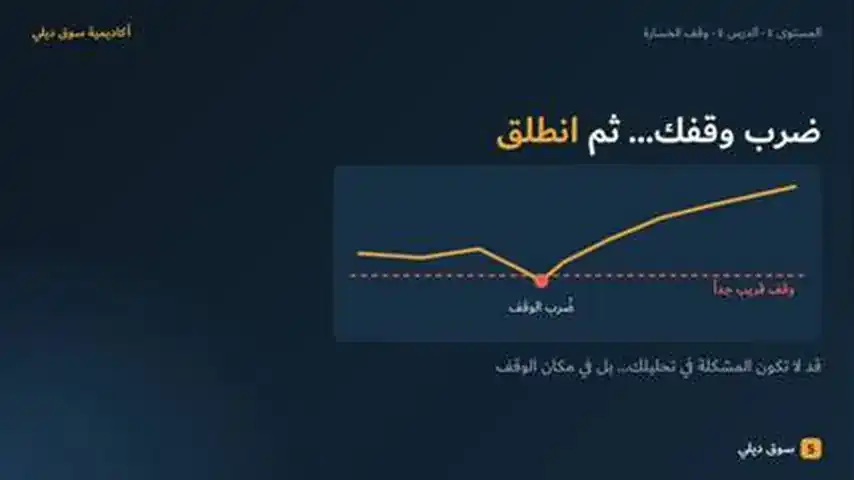
A stop loss belongs where your trade idea is proven wrong — beyond support (for a buy) or resistance (for a sell), with room for spread and normal noise. Then size the trade from that distance.
- When the stop price is reached the order becomes a market order, so the fill can differ from your stop (SEC, FINRA).
- Avoid fixed-pip stops, stops exactly at the level, stops inside normal noise, and stops chosen by the amount that feels comfortable.
- Move a stop only to reduce risk (breakeven or trailing) — never further away.
Teste rápido
Três perguntas. Escolha uma resposta para ver o porquê.
1.You buy after a bounce from support. Where does the stop usually go?
2.When a stop order is triggered, what does it become?
3.Which stop adjustment is acceptable?
Fontes
Cada fato desta aula é sustentado pelas fontes abaixo.
- 1.SEC Investor.gov — Investor Bulletin: Stop, Stop-Limit and Trailing Stop OrdersStop order becomes a market order when stop price is reached; execution price can deviate significantly; trailing stops
- 2.FINRA — Stop Orders: Factors to Consider During Volatile MarketsShort-term price moves can trigger stops; stop prices aren't guaranteed execution prices
- 3.CME Group — Futures with a Stop vs. Defined Outcomes with OptionsStop may be based on a change in trend or the trader's maximum loss threshold
Conteúdo educativo, não é recomendação de investimento. Aviso de risco: operar forex, CFDs, ouro e cripto envolve alto risco e pode não ser adequado para todos. Você pode perder mais do que investiu. A Souq Daily é uma plataforma educacional. Nada aqui é recomendação de investimento, sugestão ou oferta, e resultados passados não garantem resultados futuros.