Lesson 3 of 123:572 Sources
Trend: up, down and sideways — how to identify it
Recorded. Publishing soon
Educational content, not investment advice. Nour explains how markets work. She never tells you what to buy or sell.
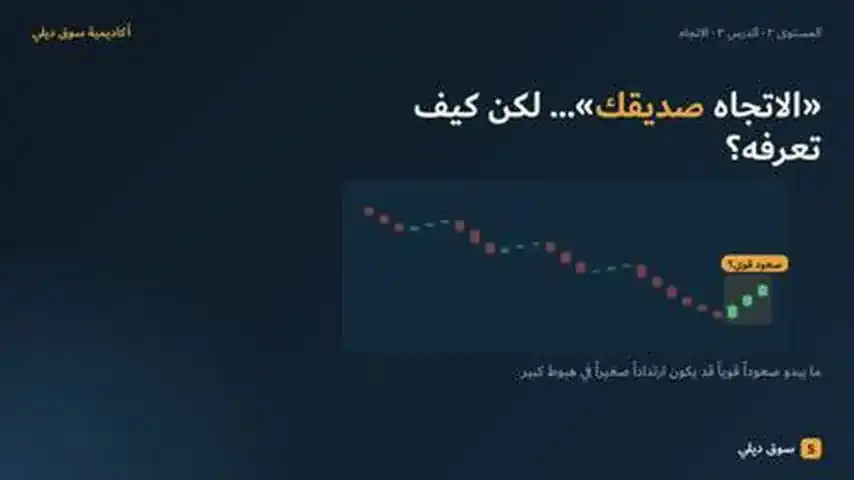
Price moves in waves of peaks and troughs. Comparing them gives a clear rule for the trend instead of a feeling.
- Uptrend: higher highs AND higher lows.
- Downtrend: lower highs AND lower lows.
- Sideways: price moves between a ceiling and a floor; for most investors, a time to stand aside.
- Markets never move one way forever. Breaking the last higher low (or lower high) is the first warning of a change — a probability, not a verdict.
- Write your trend as a testable sentence, e.g. “up while price is above 1.1050”.
Quick check
Three questions. Pick an answer to see why.
1.Which describes an uptrend?
2.In the lesson's uptrend, which event is the strongest warning of a change?
3.According to ASX education material, a sideways market for most investors is:
Sources
Every fact in this lesson is backed by the sources below.
- 1.ASX — Shares course 11: Technical analysis (PDF)Uptrend = higher highs and higher lows; downtrend = lower lows and lower highs; sideways market = time to stand aside
- 2.CME Group Education — Trend and continuation patternsMarkets never move in one direction forever
Educational content, not investment advice. Risk warning: trading forex, CFDs, gold and crypto carries a high level of risk and may not be suitable for everyone. You can lose more than you put in. Souq Daily is an education platform. Nothing here is investment advice, a recommendation or an offer, and past performance does not predict future results.